
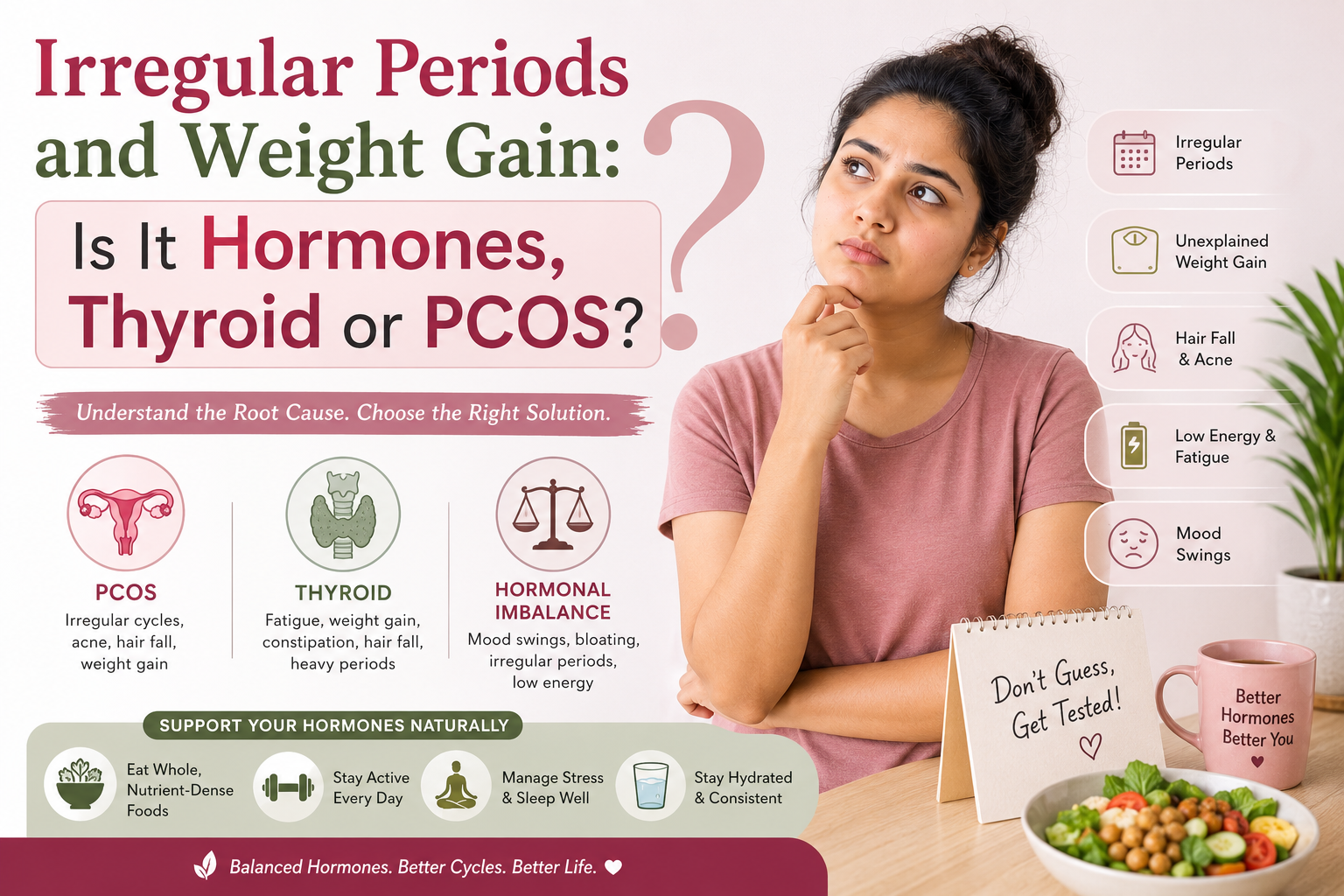
Irregular Periods and Weight Gain: Is It Hormones, Thyroid, or PCOS?
Author: Dt. Apeksha Khandelwal
Category: Women's Health | PCOS | Thyroid | Hormonal Health
Reading Time: 10–12 Minutes
Have your periods become irregular? Are you gaining weight despite eating healthy and exercising? If you're constantly wondering why the weighing scale keeps increasing while your menstrual cycle becomes unpredictable, you're not alone.
Many Indian women experience irregular periods and unexplained weight gain, but often ignore these symptoms or assume they're simply due to stress or poor lifestyle habits. In reality, these changes may be linked to hormonal imbalance, thyroid disorders, or Polycystic Ovary Syndrome (PCOS).
Although these conditions share several symptoms, they have different causes and require different treatment approaches. Understanding the difference is the first step toward improving your health.
In this guide, we'll explain how hormones, thyroid disorders, and PCOS affect your body, when diet can help, and when it's important to seek medical advice.
Why Are Hormones Important?
Hormones are chemical messengers that regulate almost every function in your body, including:
-
Menstrual cycle
-
Metabolism
-
Weight management
-
Fertility
-
Mood
-
Sleep
-
Blood sugar
-
Energy levels
-
Skin and hair health
Even a slight imbalance in these hormones can affect multiple body systems at once.
Why Do Irregular Periods and Weight Gain Often Occur Together?
Weight gain and irregular periods are closely connected because many hormones influence both metabolism and reproductive health.
Common causes include:
-
Insulin resistance
-
Thyroid disorders
-
PCOS
-
Chronic stress
-
Poor sleep
-
High cortisol levels
-
Menopause or perimenopause
The challenge is that these conditions often have overlapping symptoms, making self-diagnosis difficult.
Is It a Hormonal Imbalance?
General hormonal imbalance refers to changes in hormones such as estrogen, progesterone, insulin, cortisol, or testosterone.
Common Symptoms
-
Irregular periods
-
Mood swings
-
Fatigue
-
Acne
-
Hair fall
-
Low libido
-
Difficulty sleeping
-
Weight gain
-
Sugar cravings
Hormonal imbalance can result from stress, nutritional deficiencies, obesity, chronic illnesses, or underlying medical conditions.
Could It Be Thyroid?
The thyroid gland controls your metabolism by producing thyroid hormones (T3 and T4).
When the thyroid becomes underactive (hypothyroidism), your metabolism slows down.
Common Symptoms of Hypothyroidism
-
Weight gain
-
Constant fatigue
-
Feeling cold frequently
-
Dry skin
-
Hair fall
-
Puffy face
-
Constipation
-
Heavy or irregular periods
-
Slow heart rate
-
Difficulty concentrating
Many women mistakenly assume they're simply "lazy" or "getting older" when these symptoms may actually indicate thyroid disease.
Could It Be PCOS?
Polycystic Ovary Syndrome (PCOS) is one of the most common hormonal disorders among Indian women of reproductive age.
PCOS affects ovulation and often causes increased levels of androgens (male hormones).
Common Symptoms
-
Irregular or missed periods
-
Weight gain around the abdomen
-
Acne
-
Facial hair growth
-
Hair thinning
-
Difficulty conceiving
-
Dark patches around the neck or underarms (Acanthosis Nigricans)
-
Insulin resistance
Not every woman with PCOS has ovarian cysts, and not every woman with ovarian cysts has PCOS.
Hormonal Imbalance vs Thyroid vs PCOS
| Symptom | Hormonal Imbalance | Hypothyroidism | PCOS |
|---|---|---|---|
| Irregular periods | ✔ | ✔ | ✔ |
| Weight gain | ✔ | ✔✔ | ✔✔ |
| Hair fall | ✔ | ✔ | ✔ |
| Acne | ✔ | Sometimes | ✔✔ |
| Facial hair | Sometimes | Rare | ✔✔ |
| Fatigue | ✔ | ✔✔ | ✔ |
| Feeling cold | Rare | ✔✔ | Rare |
| Constipation | Sometimes | ✔✔ | Rare |
| Fertility issues | ✔ | ✔ | ✔✔ |
Can Diet Help?
Yes—but the approach depends on the underlying cause.
If You Have Hormonal Imbalance
Focus on:
-
High-protein meals
-
Healthy fats
-
Fiber-rich foods
-
Stress management
-
Better sleep
-
Regular exercise
If You Have Hypothyroidism
A thyroid-friendly diet should include:
-
Adequate protein
-
Selenium-rich foods
-
Zinc-rich foods
-
Iron-rich foods
-
Iodized salt (in recommended amounts)
-
Plenty of fruits and vegetables
Take thyroid medication on an empty stomach and maintain the recommended gap before eating or taking calcium and iron supplements.
If You Have PCOS
Nutrition should focus on improving insulin sensitivity.
Include:
-
Whole grains
-
Millets
-
Lean proteins
-
Healthy fats
-
Vegetables
-
Low-GI fruits
-
Seeds and nuts
Limit:
-
Sugary drinks
-
Refined flour
-
Processed snacks
-
Excess sweets
Best Foods for Hormonal Health
These foods support overall hormonal wellness regardless of the diagnosis:
Protein
-
Paneer
-
Eggs
-
Dal
-
Greek yogurt
-
Fish
-
Chicken
-
Sprouts
Healthy Fats
-
Almonds
-
Walnuts
-
Flaxseeds
-
Chia seeds
-
Pumpkin seeds
Fiber
-
Oats
-
Whole wheat
-
Millets
-
Fruits
-
Seasonal vegetables
Anti-Inflammatory Foods
-
Turmeric
-
Ginger
-
Amla
-
Green leafy vegetables
-
Berries (when available)
Lifestyle Habits That Matter
Diet alone cannot solve hormonal problems.
For better hormonal health:
-
Exercise for at least 150 minutes each week.
-
Include strength training 2–3 times weekly.
-
Sleep for 7–9 hours.
-
Manage stress through yoga, meditation, or breathing exercises.
-
Stay hydrated.
-
Avoid crash diets.
When Should You See a Doctor?
Consult your doctor if you experience:
-
No periods for more than 3 months (when not pregnant)
-
Heavy menstrual bleeding
-
Rapid unexplained weight gain
-
Severe acne or excessive facial hair
-
Difficulty conceiving
-
Persistent fatigue
-
Hair loss that continues despite lifestyle changes
-
Symptoms of thyroid disease
Your healthcare provider may recommend:
-
Thyroid Profile (TSH, Free T3, Free T4)
-
Blood sugar and insulin tests
-
Hormonal profile
-
Vitamin D and Vitamin B12
-
Iron studies
-
Pelvic ultrasound (if PCOS is suspected)
Can These Conditions Be Managed Naturally?
While there is no single food or supplement that can "cure" hormonal disorders, many women notice significant improvement through:
-
Personalized nutrition
-
Healthy weight management
-
Regular physical activity
-
Good sleep
-
Stress reduction
-
Appropriate medication when needed
The earlier these conditions are identified, the easier they are to manage.
Final Thoughts
Irregular periods and weight gain are your body's way of signaling that something may need attention. Whether the cause is hormonal imbalance, hypothyroidism, or PCOS, ignoring these symptoms can delay diagnosis and treatment.
Instead of relying on internet myths or restrictive diets, seek the right medical evaluation and adopt sustainable nutrition and lifestyle habits. A personalized diet plan, regular exercise, and evidence-based medical care can help you regain hormonal balance, improve energy levels, and support long-term health.
Remember, every woman is unique—and so is her hormonal journey.
Frequently Asked Questions
Can thyroid cause irregular periods?
Yes. Hypothyroidism can affect menstrual cycles, causing irregular, heavy, or infrequent periods.
Does PCOS always cause weight gain?
No. While many women with PCOS experience weight gain, lean PCOS also exists.
Can diet cure PCOS or thyroid disease?
Diet can significantly improve symptoms and support treatment but cannot replace prescribed medication.
When should I get tested for hormonal imbalance?
If you have persistent irregular periods, unexplained weight gain, acne, hair fall, or fertility issues, consult your doctor for evaluation.
About Dt. Apeksha Khandelwal
Dt. Apeksha Khandelwal is a clinical dietitian and founder of Diet by Apeksha, specializing in PCOS, thyroid disorders, diabetes, weight management, gut health, fertility nutrition, and women's hormonal wellness. She helps women achieve sustainable health through evidence-based, personalized Indian nutrition and lifestyle guidance.