
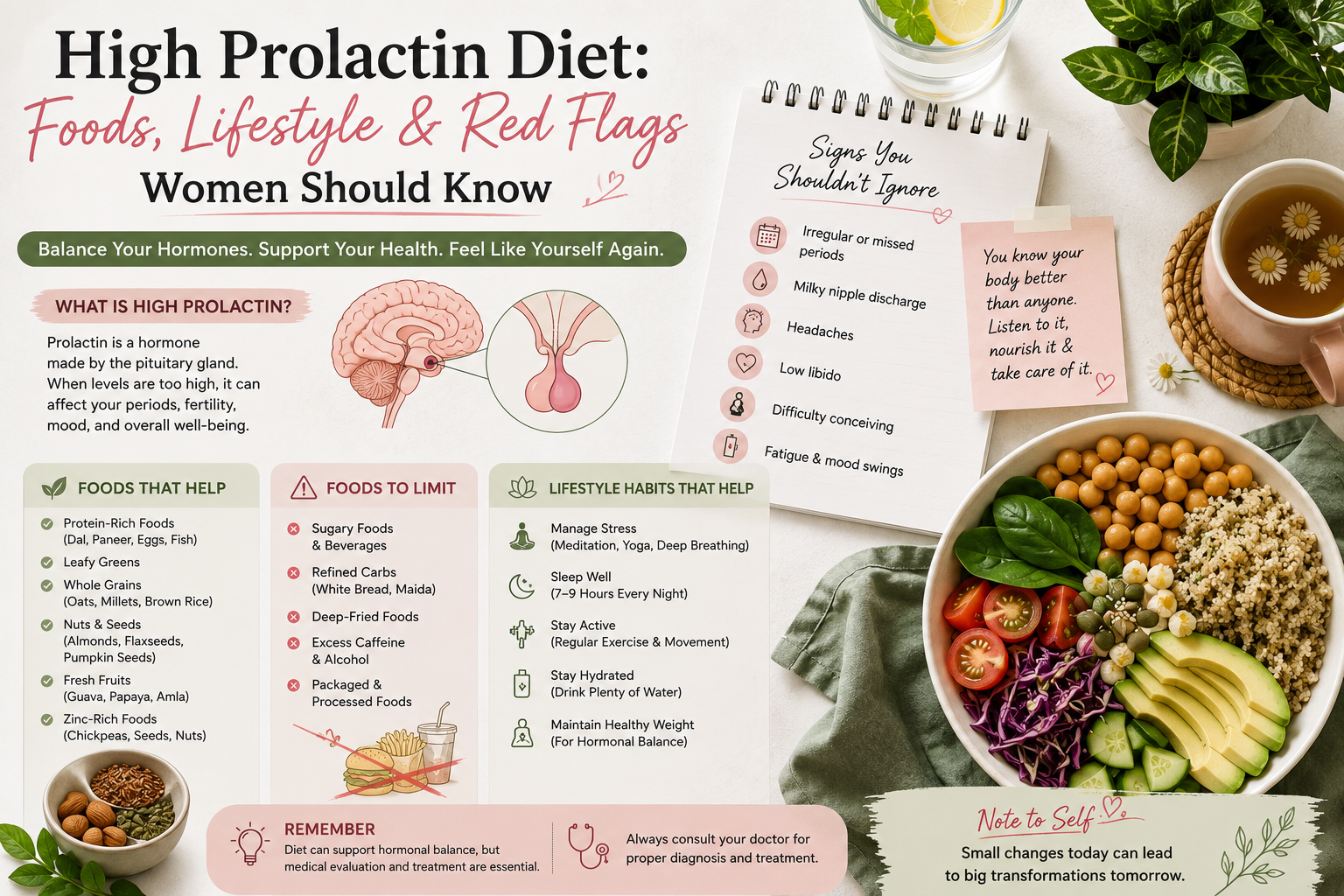
Hormonal health plays a vital role in every stage of a woman's life—from regular menstrual cycles and fertility to mood, metabolism, and overall well-being. One hormone that often goes unnoticed until symptoms appear is prolactin.
While prolactin is essential for breastfeeding after childbirth, high prolactin levels (Hyperprolactinemia) in women who are not pregnant or breastfeeding can cause irregular periods, fertility problems, breast discharge, headaches, and other hormonal concerns.
Many women ask, "Can diet reduce prolactin naturally?"
The answer is that diet alone cannot cure high prolactin, especially if it is caused by a pituitary gland disorder or certain medications. However, a balanced diet and healthy lifestyle can support overall hormonal health, reduce inflammation, improve stress management, and complement medical treatment.
In this article, you'll learn what prolactin is, why it becomes elevated, which foods support hormonal health, what lifestyle changes may help, and the warning signs you should never ignore.
What is Prolactin?
Prolactin is a hormone produced by the pituitary gland, a small gland located at the base of the brain.
Its primary role is to stimulate breast milk production after childbirth. However, prolactin also influences:
-
Menstrual cycles
-
Fertility
-
Ovulation
-
Breast health
-
Immune function
-
Bone health
-
Reproductive hormones
Normally, prolactin levels are low in women who are not pregnant or breastfeeding.
What is Hyperprolactinemia?
Hyperprolactinemia means higher-than-normal levels of prolactin in the blood.
Elevated prolactin can interfere with estrogen and progesterone production, disrupting ovulation and menstrual cycles.
Common Symptoms of High Prolactin
Women with elevated prolactin may experience:
-
Irregular or missed periods
-
Difficulty conceiving
-
Milky nipple discharge (without pregnancy or breastfeeding)
-
Breast tenderness
-
Low libido
-
Vaginal dryness
-
Headaches
-
Blurred vision (in some cases)
-
Mood changes
-
Fatigue
Some women may have no symptoms and only discover high prolactin during fertility evaluations or routine blood tests.
What Causes High Prolactin?
Several factors can increase prolactin levels.
Medical Causes
-
Pituitary adenoma (Prolactinoma)
-
Hypothyroidism
-
PCOS (in some women)
-
Kidney disease
-
Liver disease
Certain Medications
Some medicines used for depression, anxiety, psychosis, high blood pressure, or nausea may increase prolactin.
Never stop prescribed medications without consulting your doctor.
Lifestyle Factors
Temporary increases may occur due to:
-
Chronic stress
-
Poor sleep
-
Intense exercise
-
Nipple stimulation
Can Diet Reduce High Prolactin?
There is no specific food that directly lowers prolactin levels.
However, a nutrient-rich diet can:
-
Support hormonal balance
-
Improve thyroid health
-
Reduce chronic inflammation
-
Promote healthy body weight
-
Support fertility
-
Help manage stress-related hormonal changes
Diet should always be considered supportive, not a replacement for medical evaluation or treatment.
Best Foods for Women with High Prolactin
1. Protein-Rich Foods
Protein helps maintain muscle mass, supports hormone production, and promotes satiety.
Choose:
-
Moong dal
-
Chana
-
Rajma
-
Paneer
-
Eggs
-
Fish
-
Chicken
-
Greek yogurt
-
Tofu
2. Green Leafy Vegetables
Leafy vegetables provide folate, magnesium, iron, and antioxidants.
Include:
-
Spinach
-
Fenugreek leaves
-
Amaranth
-
Drumstick leaves
3. Fresh Seasonal Fruits
Fruits provide vitamins, minerals, and antioxidants.
Good choices include:
-
Guava
-
Apple
-
Orange
-
Papaya
-
Pomegranate
-
Amla
4. Whole Grains
Whole grains support blood sugar balance and provide fiber.
Examples:
-
Oats
-
Bajra
-
Jowar
-
Ragi
-
Brown rice
-
Whole wheat
5. Healthy Fats
Healthy fats are important for hormone production.
Include:
-
Almonds
-
Walnuts
-
Pumpkin seeds
-
Flaxseeds
-
Chia seeds
-
Sesame seeds
6. Zinc-Rich Foods
Zinc plays an important role in immune function and reproductive health.
Sources include:
-
Pumpkin seeds
-
Chickpeas
-
Lentils
-
Cashews
-
Eggs
Foods to Limit
While no food directly causes high prolactin, limiting highly processed foods can support overall metabolic health.
Try to reduce:
-
Sugary drinks
-
Packaged snacks
-
Bakery products
-
Deep-fried foods
-
Excess sweets
-
Ultra-processed foods
-
Excess alcohol
Lifestyle Habits That Support Hormonal Health
Lifestyle changes can complement medical treatment.
Prioritize Sleep
Aim for 7–9 hours of quality sleep each night.
Manage Stress
High stress may temporarily increase prolactin.
Practice:
-
Yoga
-
Meditation
-
Deep breathing
-
Walking
-
Journaling
Stay Active
Aim for at least 150 minutes of moderate physical activity each week.
Avoid excessive overtraining if advised by your healthcare provider.
Maintain a Healthy Weight
Achieving and maintaining a healthy weight can improve overall hormonal function.
Sample One-Day Diet Plan
| Time | Meal |
|---|---|
| Morning | Warm water + soaked almonds |
| Breakfast | Moong dal chilla + paneer |
| Mid-Morning | Guava |
| Lunch | 2 rotis + dal + seasonal vegetables + salad + curd |
| Evening | Roasted chana + buttermilk |
| Dinner | Vegetable curry + grilled paneer + roti |
| Bedtime | Herbal tea (if suitable) |
Red Flags You Should Never Ignore
Consult a doctor if you have:
-
Milky nipple discharge without pregnancy
-
No periods for more than three months
-
Difficulty conceiving
-
Persistent headaches
-
Blurred or reduced vision
-
Recurrent dizziness
-
Rapid hormonal changes
These symptoms may require further evaluation, including blood tests and imaging studies.
How is High Prolactin Diagnosed?
Your doctor may recommend:
-
Serum prolactin test
-
Thyroid function tests (TSH, Free T3, Free T4)
-
Pregnancy test (when applicable)
-
MRI of the pituitary gland (if indicated)
-
Kidney and liver function tests
Can High Prolactin Be Treated?
Yes. Treatment depends on the underlying cause.
It may include:
-
Treating hypothyroidism
-
Adjusting medications (under medical supervision)
-
Medicines that lower prolactin
-
Monitoring prolactin levels
-
Surgery in rare cases involving large pituitary tumors
Final Thoughts
High prolactin is a treatable condition, but it should never be ignored—especially if you experience irregular periods, fertility issues, or unexplained breast discharge.
While there is no "magic food" that lowers prolactin, a balanced Indian diet rich in protein, fiber, healthy fats, fruits, vegetables, and whole grains can support overall hormonal health and complement medical treatment.
If you're experiencing symptoms, consult a qualified healthcare professional for proper diagnosis. Early treatment can improve reproductive health, menstrual regularity, and overall quality of life.
Frequently Asked Questions
Can diet lower prolactin naturally?
A healthy diet supports overall hormonal health but does not directly treat high prolactin caused by medical conditions.
Which foods are good for high prolactin?
Protein-rich foods, fruits, vegetables, whole grains, nuts, and seeds support general hormonal health.
Can stress increase prolactin?
Yes. Physical and emotional stress can temporarily raise prolactin levels.
Is high prolactin always serious?
Not always. Some causes are temporary, while others require medical treatment. Persistent high prolactin should always be evaluated by a doctor.
About Dt. Apeksha Khandelwal
Dt. Apeksha Khandelwal is a clinical dietitian and founder of Diet by Apeksha, specializing in PCOS, thyroid disorders, diabetes, weight management, fertility nutrition, gut health, and women's hormonal wellness. She helps women improve their health through evidence-based, personalized Indian nutrition and sustainable lifestyle changes.